Call Now at 941-235-8242 for Dignified Burial, Cremation, and Memorial Services in Charlotte, Manatee, & Collier Counties


How to Plan A Funeral: Step by Step Guide
Planning a funeral involves making important decisions about how to honor a loved one, from choosing burial or cremation to arranging the service and informing family and friends. During a difficult time, knowing what to do first after a person dies can make the process more manageable. A clear funeral planning checklist helps you organize essential tasks, understand funeral costs, coordinate with a funeral home, and ensure the arrangements reflect your loved one’s wishes. This guide explains how to plan a funeral in five stages, covering 16 practical steps to help you move from the initial arrangements to the day of the service.
What to Do First When Someone Dies?
When someone dies, contact the appropriate medical or emergency authority to confirm the death and then contact a funeral home for guidance on transportation and arrangements. Notify immediate family members, identify the person authorized to make decisions, and gather the available documents.
The first steps depend on where the death occurred:
At home: If the death was unexpected, contact emergency services. If the person was receiving hospice care, follow the hospice provider’s instructions.
In a hospital: Ask the hospital staff about the release process, required documentation, and when the funeral home can collect the deceased.
In a hospice facility: Contact the hospice team, which explains the applicable procedures and coordinates the next steps with the family.
How to Plan A Funeral Step by Step?
To plan a funeral, follow the steps mentioned below:
Confirm the death
Contact funeral home
Notify the family & friends
Gather necessary documents
Choose burial or cremation service
Set a budget
Arrange the Funeral
Notify friends, coworkers, and extended family
Coordinate the service and complete follow-up tasks
Step 1: Confirm the Death
The first step in planning a funeral is to follow the appropriate procedures to confirm the death and contact a funeral home for guidance on what to do next. The process depends on where the death occurred. If the death happened unexpectedly at home, contact emergency services. If the person was receiving hospice care or died in a hospital, follow the instructions provided by the medical or hospice team.
Step 2: Contact a Funeral Home
Contacting a funeral is the next step to take once the death is confirmed. A funeral director can explain how transportation is arranged, which documents are needed, and what decisions the family should make first. When contacting the funeral home, provide the deceased's name and location, your contact details, and any known funeral wishes or existing arrangements. Ask about the next steps, when to schedule the arrangement meeting, and which decisions can wait. You do not need to finalize every detail during the first call; focus on understanding the immediate requirements and establishing a clear plan.
Step 3: Notify the Family & Friends
After contacting the funeral home, notify immediate family members and identify one person to coordinate communication and arrangements. Having a primary contact helps prevent confusion, repeated calls, and conflicting instructions.
The family should also identify the person authorized to make funeral decisions. This may depend on existing arrangements, applicable law, and the circumstances, so ask the funeral director what authorization is required.
Step 4: Gather Necessary Documents
Once the death notification has been made to the family and friends, gather the documents and information available of the deceased, including:
Government-issued identification for the deceased.
Written funeral instructions or details of a prepaid funeral plan.
Life insurance policy information, if applicable.
Military discharge paperwork, such as DD Form 214, if the deceased served in the military.
Contact information for a preferred funeral home, cemetery, or religious organization.
Not every document is needed immediately. The funeral director can explain what is required for the selected arrangements and which paperwork can be provided later. During this stage, ask trusted relatives or friends to help with calls, document collection, or other practical tasks. Sharing responsibilities can make the early decisions easier to manage.
Step 5: Choose a Funeral Service
Choosing a funeral service is one of the most important funeral planning decisions. Consider the deceased's known wishes, religious or cultural traditions, family preferences, and budget before confirming the arrangements.
Burial involves placing the deceased's body in a cemetery or another permitted burial location. Depending on the arrangements, the family may choose a viewing, a traditional funeral service, a graveside ceremony, and a casket. Cemetery expenses, such as the burial plot and grave opening and closing, may be charged separately from the funeral home's services.
Cremation involves reducing the body to cremated remains through a regulated process. Families can choose a funeral or viewing before cremation, arrange a memorial service afterward, or select a simpler arrangement. Ask the provider about authorization requirements, container options, and the services included in the price.
A memorial service allows family and friends to gather to remember the deceased. It may take place without the body present and can be held at a funeral home, place of worship, community venue, or another suitable location.
Before deciding which funeral service to go with, ask the funeral director to explain the available options, the practical requirements, and the estimated costs. If the deceased left written instructions or made prepaid arrangements, review those details before making any decision.
Step 6: Set a Budget
Funeral costs depend on the services selected, the location, the funeral provider, and whether burial or cremation is chosen. Establishing a budget early helps the family compare options and avoid approving services without understanding the total expense.
Ask the funeral home for its General Price List (GPL) and an itemized estimate of the selected goods and services. In the United States, the Federal Trade Commission's Funeral Rule provides consumer protections for covered funeral providers, including requirements concerning price disclosures and the selection of funeral goods and services.
Before approving the arrangements, ask the funeral director about:
What is the total estimated cost?
Which services and products are optional?
Are cemetery or third-party charges included?
What payment methods and deadlines apply?
Are there lower-cost alternatives that meet the family's needs?
Can the selected arrangements and prices be confirmed in writing?
Step 7: Arrange the Funeral
Once the main arrangements and budget are established, arrange the service around the deceased's wishes and the family's preferences. The funeral director can help coordinate the date, location, participants, and schedule.
Start by choosing the type of service. It may be a traditional funeral, a graveside ceremony, a memorial service, or a celebration of life. Religious and cultural traditions may also influence the ceremony's structure and timing.
Next, organize the main details:
Date and location: Confirm the schedule with the funeral home, officiant, and any other providers involved.
Officiant and speakers: Choose who will lead the ceremony and who will share readings, prayers, or personal tributes.
Music and readings: Select songs, poems, prayers, or passages that reflect the person's life and beliefs.
Photographs and personal touches: Gather photographs for a memorial display, slideshow, or printed program.
Clothing and personal items: Ask the funeral home what items are needed or permitted if the arrangements include a viewing.
Pallbearers: If the service includes a casket procession, select people who are willing and comfortable with the responsibility. Ask the funeral director about alternatives if needed.
The funeral program may include the deceased's name and photograph, the order of service, the names of speakers, selected readings, and a short tribute. Review the names, dates, and sequence of events carefully before approving it for printing.
If the family plans a reception afterward, decide on a venue, approximate guest count, refreshments, and who will coordinate the arrangements. A simple gathering can be just as meaningful as a larger event.
Step 7: Notify Friends, Coworkers, and Extended family
Once the service details are confirmed, notify relatives, friends, coworkers, and other people who may wish to attend. An obituary or death announcement can communicate the news, honor the deceased, and provide practical information about the service.
An obituary commonly includes the deceased's name, a brief account of their life, surviving family members if the family wishes to include them, and confirmed service details.
Before publishing, check all names, dates, times, and locations. Share the announcement through appropriate channels, such as the funeral home's website, a local publication, or family communication groups.
Step 8: Coordinate the Service and Complete Follow-Up Tasks
Before the funeral begins, confirm arrival times, seating, transportation, music, printed programs, and the order of service. The funeral director can explain how the ceremony and any procession will proceed.
A traditional funeral service may include a welcome, readings or prayers, personal tributes, music, closing remarks, and a procession to the cemetery. A memorial service, graveside ceremony, or celebration of life may follow a different format.
Follow the agreed schedule and communicate any changes through the designated family contact. If burial is planned, confirm cemetery access and graveside arrangements. If cremation is part of the plan, follow the funeral home's or cremation provider's instructions for the applicable authorization and scheduling procedures.
After the service, organize the remaining paperwork. Depending on the circumstances, follow-up tasks may include:
Obtaining certified death certificates.
Contacting life insurance providers about claims.
Notifying Social Security when applicable.
Asking about eligible veterans' funeral or survivor benefits.
Contacting pension administrators and other relevant organizations.
Keeping funeral receipts and important documents together.
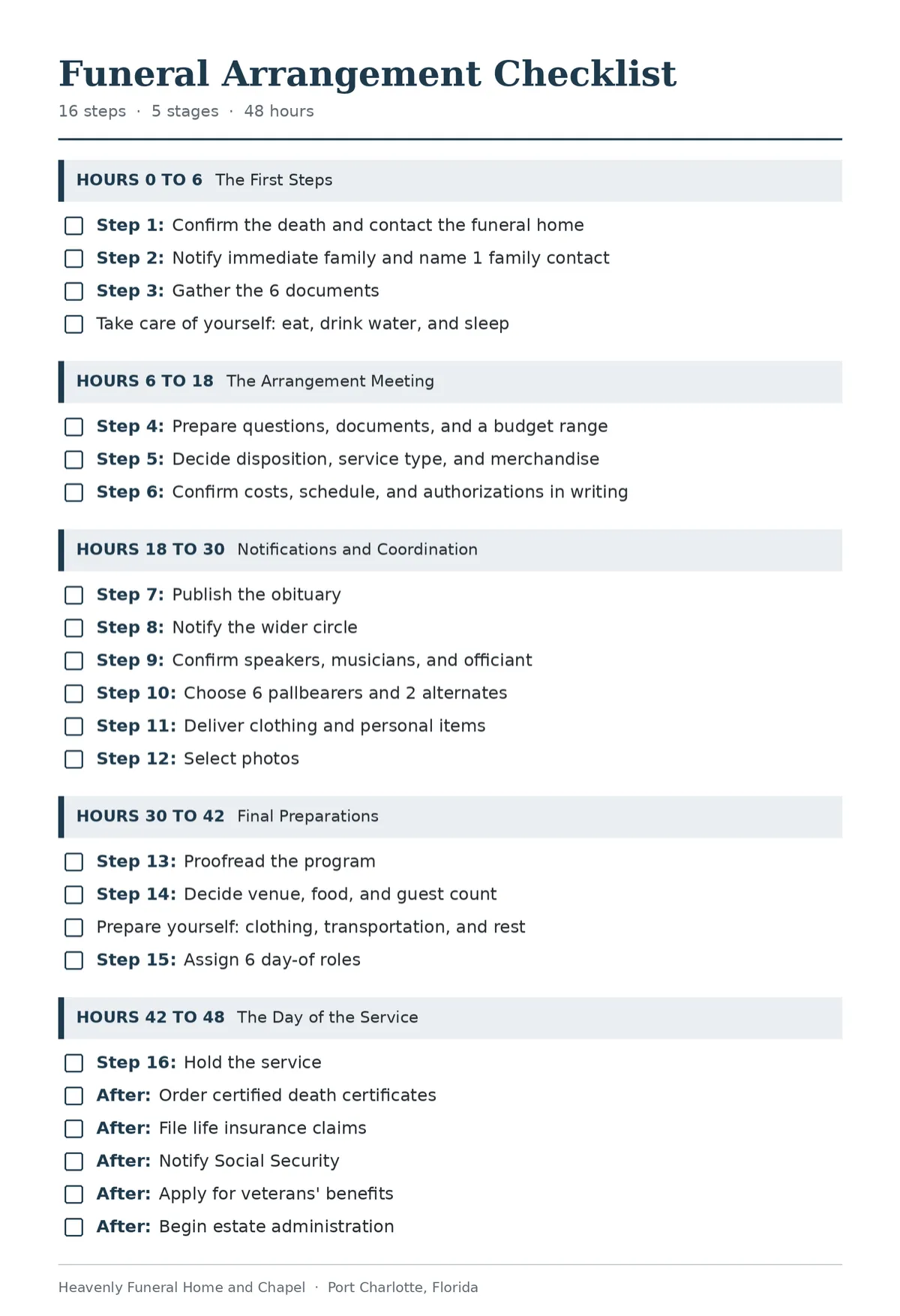
Funeral Planning Checklist
Here's the funeral planning checklist for families with proper steps and outline.
What Not to Do When Planning A Funeral?
When planning a funeral, avoid rushed decisions, unexpected expenses, and arrangements that do not reflect your loved one's wishes. Below are the 5 mistakes to avoid when planning a funeral.
Don't Rush Into Funeral Arrangements: Review your loved one's wishes, existing funeral plans, and family preferences before making major decisions. Ask the funeral director which tasks require immediate attention and which can wait.
Don't Ignore Your Budget: Avoid approving funeral services, caskets, burial plots, or cremation arrangements without understanding the total cost. Request an itemized estimate and review the funeral home's General Price List before committing.
Don't Assume Every Funeral Service Is Necessary: Some services and products may be optional depending on your choices and circumstances. Ask which items are required, which are optional, and whether more affordable alternatives are available.
Don't Overlook Important Documents and Family Wishes: Check for written funeral instructions, prepaid arrangements, religious or cultural preferences, and required authorizations. Gather the necessary documents early to help prevent delays.
Don't Handle Everything Alone or Leave Details Unconfirmed: Delegate tasks to trusted family members and confirm the service date, location, officiant, transportation, and cemetery or crematory arrangements with the funeral director.
FAQs
What Is the 40-Day Rule After Death?
The 40-day rule is a mourning custom that marks the 40th day after death. Eastern Orthodox Christianity holds a memorial service on that day. Judaism observes a 30-day mourning period called shloshim. Customs differ by faith and region, and the 40-day rule carries no legal force.
What Is the Order of Family at a Funeral?
The order of family at a funeral follows closeness of relationship in Western funeral customs. The front rows seat the spouse or partner, then children, parents, and siblings. Grandchildren and extended family follow. The funeral director confirms the seating order before the service.
Who Walks Out First at a Funeral?
In Western funeral customs, the casket leaves first, carried by the pallbearers. The immediate family follows the casket, then extended family, then guests. The officiant leads the processional in many services. The funeral director cues each row, and customs differ by faith and region.
What Questions Should You Ask a Funeral Director?
The questions to ask a funeral director are mentioned below:
What does the basic services fee cover?
Which items on the General Price List are optional?
What is the total cost, including third-party charges such as cemetery fees and death certificates?
What is the timeline for each step?
Who coordinates with the cemetery or crematory?
Which payment methods and deadlines apply?
What Happens if Family Members Disagree About Funeral Arrangements?
When family members disagree, the legally authorized person under Florida Statute 497.005 holds the decision, ranked by priority class. Within one class, such as adult children, the funeral home relies on 1 member's authorization if that member states no known objection from others in the class. Clergy or an attorney mediates ongoing disputes.
Request 24/7 Funeral Arrangements in Port Charlotte, FL

Copyright 2026. . All Rights Reserved.